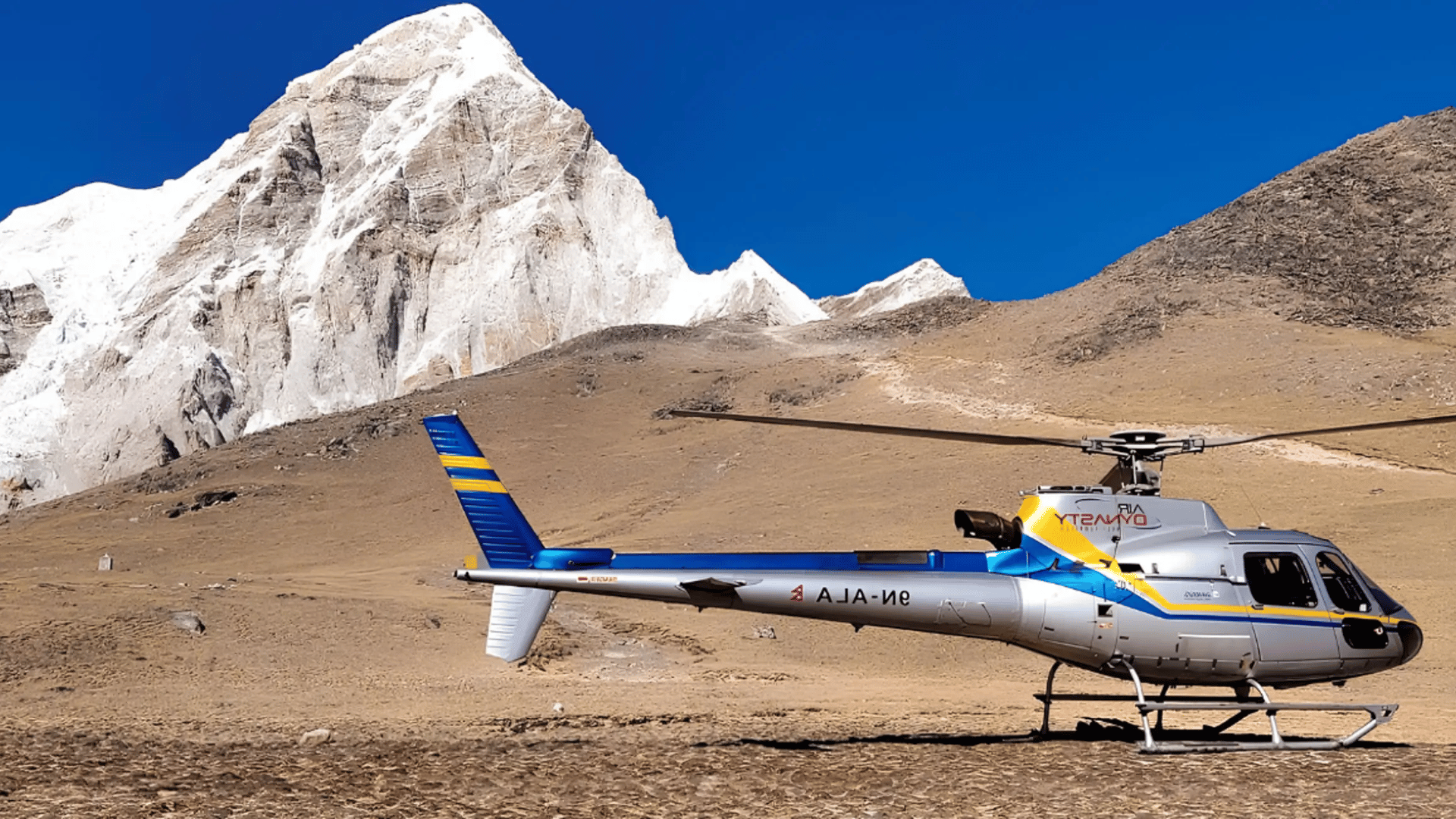
The Everest base camp helicopter tour is Nepal's priciest tourist flight, and its sticker price swirls with confusion: clusters of same-day operators, fuel stops, permits, and a thousand small charges. This breakdown puts every single dollar in place so you can budget with confidence in 2026.
The Price Ranges, Clearly
Prices in 2026 cluster into two bands. Shared seats on operator-consolidated tours run roughly USD 1,200-1,500 per person. Private charters (the whole machine, up to five passengers) run USD 5,000-7,500 for the aircraft from Kathmandu. The wide private range is about operator type, fleet age, and included services more than profit margin.
Where the Money Goes
- Aircraft and crew: 40-50% - turbine time is expensive; pilots earn senior salaries in high-altitude airspace
- Fuel and uplifts: 15-20% - Lukla upgrades, jet fuel at valley prices
- Airport fees and CAAN charges: 10-15% - take-off, parking, nav and regulatory fees
- Ground services: 8-12% - transfers, briefings, dispatch, support vehicles
- Insurance and liability: 5-8% - high-altitude premiums are real
- Operator margin: 10-15% - modest in a hyper-competitive market
What the Base Price Includes (Check Yours)
- Return flight from Kathmandu domestic terminal or your hotel pick-up point
- Two landings: Lukla fuel stop and one mountain pad (Kalapatthar preferred)
- Standard passenger safety and licensing paperwork
- Airport departure taxes
What Is Almost Always Extra
- Sagarmatha National Park entry permit (USD ~30) - not in the fare
- Tims Card / trekking_area fees if you step beyond the pad
- Oxygen canisters when equipping the pad for very seniors or medical passengers
- Extended stay at Kalapatthar or a second landing beyond the standard profile
- Hotel-to-hotel private car if your accommodation is outside the pickup zone
Why Private Flights Cost More Per Head Than Shared
Shared seats distribute the fixed cost (aircraft + crew + fuel + fees) across up to five paying passengers, each paying far less. Private charters guarantee exclusivity - your group pays the whole machine, so per-person rates are the full spread divided by your numbers. For a couple, sharing on an operator's group can save nearly 50% over a private pair.
How to Pay a Fair Price, Not a Cheap One
- Compare three operators on identical itineraries (same landings, same inclusions)
- Ask for the full cost sheet before paying - a suspicious "all-inclusive" is usually a hidden-add-on vehicle
- Never pre-pay beyond a reasonable deposit; settle the balance after confirmation
- Prefer operators with their own fleet over brokers; the difference is accountability
Price vs Risk: The Two Things Never to Compromise
A USD 700 "too good to be true" Everest flight usually means older aircraft, uninsured subcontracting, or landings skipped to save fuel. The only savings that matter are ones that keep CAAN licences valid, pilots rested and the machine maintained. Price cheap on route, never on safety.
Frequently Asked Questions
Is the Everest helicopter tour worth the price?
For most travellers, yes - it compresses a 14-day trek into a morning with better summit views. Compare the full trek cost (flights, guides, lodging, 14 days) and the charter often wins on value-per-hour of awe.
Do children get a discount on the fare?
Pricing is usually per seat regardless of age, so a child occupies a full seat. A few operators offer small child discounts on private charters - ask directly.
Could prices drop by the time I fly?
They fluctuate with fuel and season but rarely fall more than 10% in a year. Booking early and off-peak is the dependable way to trim the fare.
Represent a Helicopter Agency or Operator?
We welcome guest contributions from helicopter agencies and licensed operators who want to share original route guides, flying experiences, or practical safety knowledge with our readers. Each article is clearly labelled as a contributed guest post.
Write For Us


Comments (0)
No comments yet. Be the first to share your thoughts.
Leave a Reply