

Ask a Nepali mountain pilot the most important instrument on the helicopter and they will point at the sky, not the cockpit. Himalayan flying is a conversation with the weather - a go/no-go decision made fresh every dawn, driven by physics you can learn to read.
The Anatomy of a Mountain Weather Window
Each clear slot is a short, sweet interval: calm winds, cloud ceilings high, visibility opening over the passes. These windows open at sunrise, peak mid-morning, and close as the sun heats the valleys and pumps wind up the slopes. That is why your departure is at 7 a.m., not 2 p.m.
Why the Morning Is Special
At dawn the air is cool and stable. Katabatic (down-slope) breezes have settled overnight, thermals have not started, and valley cloud has evaporated overnight. It is the only time many of Nepal's saddles are legally and safely flyable.
The Four Weather Elements Pilots Weight
- Cloud ceiling and cover: the landing pad must be visible and cloud must stay off the route
- Wind and gust factor: crosswinds at tight pads and ridge wind-tunnel are the classic killers
- Visibility: haze and afternoon glare shrink the visual cues VFR relies on
- Ice and precipitation: any moisture in the freeze line gets serious respect
The Go/No-Go Discipline
Licensed operators codify minima in operational manuals: ceiling, wind, visibility thresholds per route. The captain decides at the pad - not in the office, not on the phone. Even a "clear" day at Kathmandu can show a divorced weather picture at Kalapatthar; the pilot reads the whole route.
Weather vs "Weather": The Three Realities
- Truly marginal: safe operators ground you; time robbers like this are where incidents happen
- Divertible: a lower pad (Lukla rather than EBC) still gives a glorious day
- Clear-sky foul: high gusts mean even a blue sky can cancel a specific pad - a normal day, not a scam
What to Do When Your Flight Cancels
Breathe, hydrate, and ask two questions: does rebooking to tomorrow fall within my itinerary, and is there a divertible route today? Most operators offer same-or-next-day rebook free of charge on weather, and a happy captain enjoys finding a plan B that still earns the day.
Booking to Beat the Weather
- Choose October, November, March or April
- Schedule the flight early in your stay, leaving a retry day
- Prefer morning departures over afternoon "guaranteed" slots
- Confirm the weather-cancel policy in the written quote
Frequently Asked Questions
Can I blame the operator if weather cancels my flight?
No - weather belongs to the mountain, not the operator. A genuine cancellation preserves your safety; free rebooking is the professional response, and most maintain it.
Do helicopters ever fly in light rain?
Some routes with heavy haze airports may fly in dry drizzle, but at altitude, rain and cloud are usually the same danger. Expect grounding on anything but the clearest of mornings.
Is there a seasonal "guaranteed" month?
None is guaranteed, but November statistically holds the calmest, clearest flying in the Khumbu - the closest thing Nepal offers a sure sky.
Represent a Helicopter Agency or Operator?
We welcome guest contributions from helicopter agencies and licensed operators who want to share original route guides, flying experiences, or practical safety knowledge with our readers. Each article is clearly labelled as a contributed guest post.
Write For Us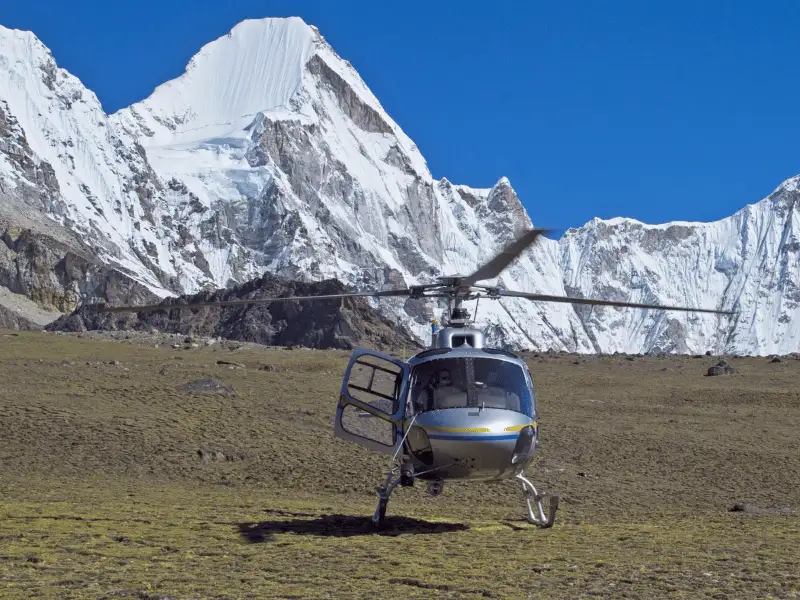



Comments (0)
No comments yet. Be the first to share your thoughts.
Leave a Reply